There was a time when advertising felt almost… handcrafted. A team sitting in a room, tossing ideas around, scribbling headlines on whiteboards, arguing over a single word for hours. It was messy, slow, and oddly satisfying.
Now, things move differently.
You type a few prompts, click a button, and within seconds — headlines, captions, visuals, even full campaign ideas appear on your screen. Efficient? Absolutely. A little unsettling? Maybe.
Somewhere between speed and soul, a question has started to linger: what happens to creativity when machines get this good?
The Rise of AI in Creative Work
AI in advertising didn’t arrive overnight. It crept in through analytics first — optimizing campaigns, tracking performance, adjusting bids.
Then it moved into content.
Today, AI tools can generate ad copies, design banners, suggest color palettes, and even predict what kind of messaging will perform best for a specific audience. It’s not just assistance anymore. It’s participation.
And for marketers under pressure to deliver faster results, this feels like a lifeline.
Deadlines shrink. Output increases. Testing becomes easier.
But speed comes with its own trade-offs.
AI-driven Ad Creatives vs Human Creativity
At the heart of it, this isn’t a battle — though it’s often framed like one.
AI-driven creatives excel at pattern recognition. They analyze what has worked before, identify trends, and replicate structures that are likely to perform well. It’s data-backed, efficient, and scalable.
Human creativity, on the other hand, thrives on unpredictability.
It’s not always logical. Sometimes it’s emotional, sometimes even irrational. A human idea can break patterns instead of following them — and that’s often what makes it memorable.
AI might suggest a headline that performs well statistically. A human might write one that feels right, even if it’s risky.
And in advertising, that difference matters.
Efficiency Is Hard to Ignore
Let’s be honest — AI tools are incredibly useful.
They can generate multiple variations of an ad in seconds. Want ten different headlines? Done. Need variations for A/B testing? No problem.
For agencies and businesses handling large-scale campaigns, this is a game-changer. It reduces workload, speeds up execution, and allows teams to focus on strategy rather than repetitive tasks.
In many cases, AI becomes the first draft — a starting point.
And sometimes, that’s all you need.
But Can AI Truly Understand Emotion?
Here’s where things get a bit tricky.
Advertising isn’t just about selling products. It’s about connecting with people.
A great ad doesn’t just inform — it resonates. It makes you feel something. Nostalgia, excitement, curiosity, even discomfort.
AI can mimic tone. It can replicate emotional language. But does it truly understand emotion?
Not quite.
It doesn’t have lived experiences. It doesn’t know what it feels like to miss someone, to celebrate a small win, or to struggle through a bad day. And those nuances often shape the most powerful creative ideas.
That’s where humans still hold an edge.
The Risk of Sameness
One subtle issue with AI-generated creatives is repetition.
Because AI learns from existing data, it tends to produce outputs that are familiar. Safe. Proven.
But creativity often lives outside that comfort zone.
If everyone uses similar tools, trained on similar datasets, there’s a risk that ads start to look and sound the same. Different brands, same tone. Different campaigns, same structure.
It’s not immediately obvious, but over time, it becomes noticeable.
And audiences? They pick up on it faster than we think.
Collaboration Instead of Competition
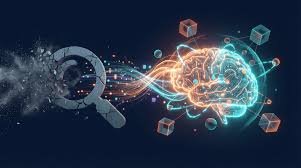
Maybe the real opportunity lies not in choosing between AI and humans, but in combining them.
AI can handle volume, analysis, and initial drafts. Humans can refine, challenge, and inject originality.
Think of it like this — AI gives you the clay, but humans shape it.
Some of the most effective campaigns today are born from this collaboration. A machine-generated idea gets reworked, tweaked, and elevated by human insight.
It’s not about replacing creativity. It’s about extending it.
What This Means for Creators
For designers, copywriters, and marketers, this shift can feel unsettling.
There’s a natural fear — if AI can do this, where do I fit in?
But the role of a creator isn’t disappearing. It’s evolving.
Instead of spending hours on repetitive tasks, creators now have the chance to focus on bigger ideas. Strategy, storytelling, brand voice — things that require depth, not just speed.
In a way, AI is pushing humans to be more creative, not less.
The Human Touch Still Matters
At the end of the day, people connect with people.
Even in a digital world, authenticity stands out. A slightly imperfect line, a quirky idea, a bold concept — these are things that often come from human intuition, not algorithms.
AI can assist, enhance, and accelerate. But the final spark? That still feels human.
A Creative Future That Feels Different
The creative process isn’t what it used to be. It’s faster, more data-driven, more dynamic.
But it’s not losing its essence.
If anything, it’s becoming more layered.
There’s space for logic and instinct, for data and emotion, for machines and humans.
And maybe that’s the point.
Not to choose one over the other, but to find a balance where both can coexist — creating work that’s not just efficient, but meaningful.
Because in the end, the best ads aren’t just seen.
They’re remembered.