There’s a strange moment that happens when you read something written by AI and think, “This is actually… good.” Not perfect, not deeply human, but good enough to pass. Maybe even good enough to publish.
And that’s where things start to get complicated.
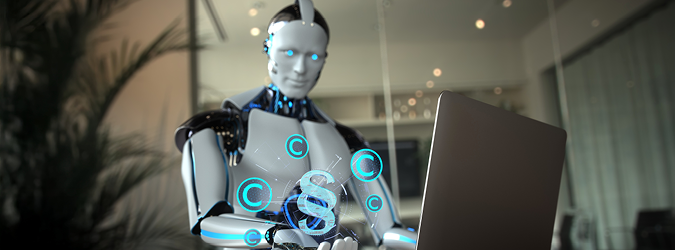
Because the moment content becomes publishable, questions of ownership follow. Who owns it? The person who prompted it? The company that built the model? Or… no one at all?
It’s not just a legal debate anymore—it’s becoming a practical one.
When Creation Doesn’t Feel Traditional
For centuries, copyright laws were built around a simple idea: a human creates something original, and that human owns it.
AI disrupts that assumption.
You type a prompt, the system generates an article, a design, a piece of music. You guided it, sure—but you didn’t “create” it in the traditional sense. At least, not entirely.
This grey area is what makes things tricky. The lines between creator, tool, and collaborator are starting to blur.
The Current Legal Landscape (And Its Gaps)
Right now, most copyright laws across the world still lean toward human authorship. If a work is created entirely by AI without meaningful human input, it may not qualify for copyright protection.
But what counts as “meaningful”?
That’s where interpretations differ.
In some cases, editing, refining, or significantly shaping AI-generated content could make it eligible for protection. In others, the bar is higher.
There’s no universal rulebook yet. And honestly, that uncertainty is part of the story.
Why This Matters More Than It Seems
At first glance, copyright might feel like a distant concern—something for lawyers and big corporations.
But it affects everyday creators too.
Writers using AI for drafts. Designers generating concepts. Marketers creating content at scale. If ownership isn’t clear, it raises questions about usage rights, monetization, and even liability.
Imagine publishing something and later finding out you don’t actually own it. Or worse, that it resembles existing work too closely.
It’s not just theoretical. These scenarios are already happening.
AI-generated Content par copyright laws ka future
Looking ahead, the future of copyright laws around AI-generated content will likely evolve in layers rather than through one sweeping change.
Governments and legal bodies are beginning to explore frameworks that acknowledge AI as a tool while still emphasizing human contribution. Some proposals suggest giving rights to the person who directed the AI, provided there’s enough creative input.
Others argue for entirely new categories of ownership—something that reflects collaboration between human and machine.
There’s also the question of training data. If an AI model learns from existing copyrighted works, should the original creators be compensated? Should there be transparency about what data was used?
These aren’t easy questions. And the answers won’t come quickly.
The Creative Industry Is Already Adapting
While laws are catching up, creators and businesses aren’t waiting.
Many are setting their own boundaries. Some companies avoid using AI-generated content for final outputs, sticking to it as a brainstorming tool. Others embrace it fully but add layers of human editing to ensure originality.
There’s also a growing emphasis on disclosure—being transparent about when and how AI is used.
It’s not mandated everywhere, but it builds trust. And in uncertain legal territory, trust becomes valuable.
A Subtle Shift in What “Original” Means
One of the most interesting changes isn’t legal—it’s philosophical.
What does originality mean when machines can generate endless variations of existing ideas?
In a way, this isn’t entirely new. Humans have always built on what came before. But AI accelerates that process to a scale we’ve never seen.
It forces us to rethink creativity itself—not as something purely individual, but as something influenced by tools, data, and context.
That doesn’t diminish human creativity. If anything, it highlights the importance of perspective, intent, and voice.
Risks You Can’t Ignore
There are practical risks here too.
Plagiarism concerns, for one. AI-generated content might unintentionally resemble existing works, especially if trained on similar data. That could lead to legal disputes, even if the user had no intention of copying.
Then there’s ownership ambiguity. If multiple people use similar prompts and generate similar outputs, who claims rights?
And what about platforms? Some AI tools have terms that grant them certain rights over generated content. Not always, but sometimes.
It’s worth reading the fine print.
Finding a Balanced Approach
For now, the safest approach seems to be a balanced one.
Use AI as a tool, not a replacement. Add your own voice, your own insights. Treat generated content as a starting point rather than a finished product.
And stay informed. Laws will change. Guidelines will evolve. What feels unclear today might become standard practice tomorrow.
Final Thoughts
We’re in the middle of a transition. Not just in technology, but in how we define creation and ownership.
AI-generated content is here to stay—that much is clear. But the rules around it are still being written.
Maybe that’s not a bad thing.
It gives us a chance to shape those rules thoughtfully, to find a balance between innovation and fairness.
Because in the end, it’s not just about who owns the words.
It’s about how we choose to value them.